

12 Apr 2026
Varanasi is often described as one of the most extraordinary cities in the world. For thousands of years, the city has stood along the banks of the Ganges River as a center of spirituality, culture and philosophical thought. Travelers arriving here quickly realize that Varanasi is unlike any other destination in India or anywhere else on the planet.
For many visitors exploring the country, the Varanasi spiritual experience becomes one of the most memorable moments of their entire journey. The city presents a living landscape where ancient traditions continue to shape everyday life. Sacred rituals, temple ceremonies and devotional chants unfold along the riverbanks from sunrise until late evening.
Unlike cities built primarily around tourism or modern urban development, Varanasi has evolved through centuries of cultural and religious traditions. Narrow alleyways wind through old neighborhoods, temples appear around every corner and the rhythm of life revolves around the sacred river.
Travelers who include Varanasi in their itinerary often discover that it provides a deeper understanding of Indian philosophy, spirituality and daily life. Exploring the city during a private India tour allows visitors to experience its cultural layers at a comfortable pace while learning about its historical significance.
Travelers interested in visiting this remarkable destination during their India private tour with car and driver can contact travel specialists at +91-9829020060 or email info@indiatourspackages.com.
Varanasi is widely regarded as one of the oldest continuously inhabited cities in the world. Historical records and religious texts suggest that the city has existed for thousands of years as an important center of learning, spirituality and cultural development.
Throughout ancient history, scholars, philosophers and spiritual teachers gathered here to exchange ideas about religion, ethics and human existence. The city became an important destination for those seeking knowledge and enlightenment.
Temples dedicated to Hindu deities were established along the riverbanks, and over time Varanasi developed into one of the most sacred pilgrimage centers in the country. Even today, millions of pilgrims travel to the city each year to perform religious rituals and prayers along the Ganges.
Walking through the narrow streets of Varanasi reveals architectural layers from different historical periods. Ancient temples stand beside medieval structures, while centuries-old buildings continue to house families who have lived in the city for generations.
For travelers interested in India cultural heritage, Varanasi represents a place where history remains deeply connected to daily life.
In Varanasi, life unfolds along the sacred Ganges while ancient rituals continue unchanged for centuries.
Chat On WhatsApp Contact UsAt the heart of Varanasi lies the Ganges River, one of the most sacred rivers in Hindu tradition. The river flows gently along the eastern edge of the city, creating a dramatic landscape of stone steps known as ghats that descend toward the water.
Each ghat has its own significance and history. Some are associated with ancient legends, while others serve as gathering places for religious ceremonies and cultural activities.
For many Hindus, bathing in the Ganges is believed to purify the soul and wash away past sins. Pilgrims arrive early in the morning to perform ritual bathing and offer prayers as the rising sun illuminates the river.
Travelers witnessing this scene often describe it as one of the most powerful cultural experiences they have ever encountered. The atmosphere is both peaceful and vibrant, reflecting centuries of spiritual devotion.
Observing these rituals provides visitors with a deeper understanding of Varanasi spiritual traditions and the role of the Ganges in Indian culture.
One of the most unforgettable experiences in Varanasi occurs at sunrise. As the first light of day touches the river, the ghats begin to fill with pilgrims, priests and local residents performing morning rituals.
Boats glide across the calm waters as travelers observe the city awakening. Devotees chant prayers, ring temple bells and light incense as part of their daily spiritual practices.
The colors of the sky reflect on the river while ancient temples stand silhouetted against the horizon. This peaceful yet vibrant scene captures the essence of the Varanasi cultural atmosphere.
Many travelers choose to take a boat ride along the river at sunrise to witness the full panorama of the ghats. From the water, the city appears as a long stretch of temples, palaces and stone steps descending toward the sacred river.
These moments often become some of the most cherished memories of a journey through India.
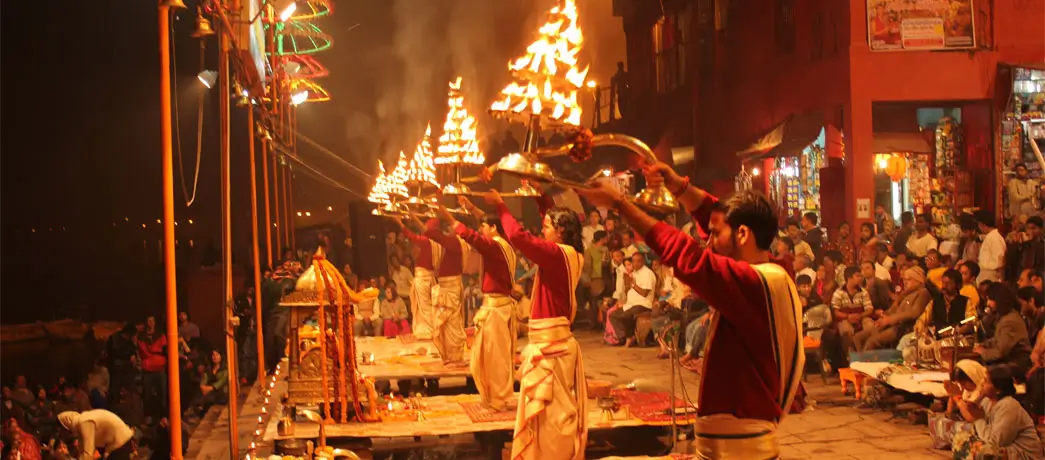
Another extraordinary experience in Varanasi takes place every evening along the ghats during the Ganga Aarti ceremony. This elaborate ritual honors the sacred river through music, fire and devotional chanting.
Priests dressed in traditional garments perform synchronized movements while holding large lamps filled with burning flames. The ceremony is accompanied by rhythmic bells, conch shells and devotional songs.
Hundreds of spectators gather along the ghats or watch from boats floating on the river. The atmosphere becomes both spiritual and theatrical as flames illuminate the night sky and reflect across the water.
Witnessing the Ganga Aarti ceremony in Varanasi offers travelers a glimpse into the deep spiritual traditions that define the city.
The ritual is not performed for tourists but rather as a daily expression of devotion. Visitors observing the ceremony become witnesses to a sacred tradition that has continued for generations.
Varanasi contains countless temples, many of which hold deep religious significance. Some of these temples have stood for centuries, while others have been rebuilt after historical events.
Among the most important temples is the Kashi Vishwanath Temple, dedicated to Lord Shiva. This temple attracts pilgrims from across India who come to offer prayers and seek blessings.
Smaller temples appear throughout the city’s labyrinth of narrow streets. Many are dedicated to different deities and reflect the diverse spiritual traditions of Hindu philosophy.
Travelers exploring these sacred sites often gain insight into the spiritual practices that shape daily life in Varanasi.
Because of the city’s religious importance, temple rituals and devotional activities occur throughout the day, creating an atmosphere of constant spiritual energy.
A place of rituals, history, and raw emotion, Varanasi leaves a lasting impact on every traveler who experiences it.
Chat On WhatsApp Contact UsBeyond the riverfront ghats, Varanasi’s old city unfolds through a maze of narrow lanes filled with markets, shrines and traditional homes. These streets are alive with activity as residents go about their daily routines.
Small shops sell silk textiles, handmade jewelry and religious offerings used in temple rituals. Street vendors prepare local snacks and tea while pilgrims walk through the lanes on their way to the river.
Exploring these alleys reveals the everyday life of the city. Children play in courtyards, priests perform rituals in small temples and artisans continue traditional crafts passed down through generations.
Walking through the historic lanes of Varanasi allows travelers to experience the authentic rhythm of the city.
Varanasi has influenced Indian culture in many ways beyond religion. The city has long been a center for classical music, literature and traditional arts.
Many renowned musicians and scholars have lived here, contributing to the development of classical Indian music traditions. The city’s cultural atmosphere encourages artistic expression and intellectual exploration.
Festivals held throughout the year celebrate these traditions through music performances, religious ceremonies and cultural gatherings.
Visitors attending these events gain a deeper appreciation of the artistic heritage that flourishes in Varanasi.
For travelers interested in India cultural tourism, the city provides a rare opportunity to experience living traditions that continue to shape the country’s artistic identity.
Travelers who visit Varanasi often describe the city as emotionally powerful and spiritually profound. Unlike many modern destinations, the city’s atmosphere reflects centuries of faith, philosophy and cultural continuity.
The combination of sacred rituals, historic temples and vibrant daily life creates an environment that feels both timeless and deeply human.
Watching pilgrims perform rituals along the river, hearing devotional chants echo through temple corridors and witnessing the Ganga Aarti ceremony leaves a lasting impression on visitors.
Varanasi challenges travelers to see beyond surface attractions and reflect on deeper questions about life, spirituality and tradition.
This transformative experience is why many visitors consider Varanasi one of the most meaningful destinations in India cultural travel.
Travelers wishing to include Varanasi in their private India travel itinerary can contact travel experts at +91-9829020060 or email info@indiatourspackages.com.
Travel assistance is available at +91-9829020060 or info@indiatourspackages.com.
Many India private tours include Varanasi for its cultural significance.
Pilgrims visit throughout the year to perform sacred ceremonies.
The city is known for classical music, spiritual learning and religious rituals.
Numerous temples are spread across the ghats and old city lanes.
Yes, it is believed to have been continuously inhabited for thousands of years.
Yes, sunrise boat rides offer views of the ghats and morning rituals.
It is an evening ritual honoring the Ganges River with fire lamps and prayers.
The river is believed to purify the soul and holds deep religious significance.
Varanasi is one of the most important spiritual centers in Hindu tradition.