

24 Nov 2025
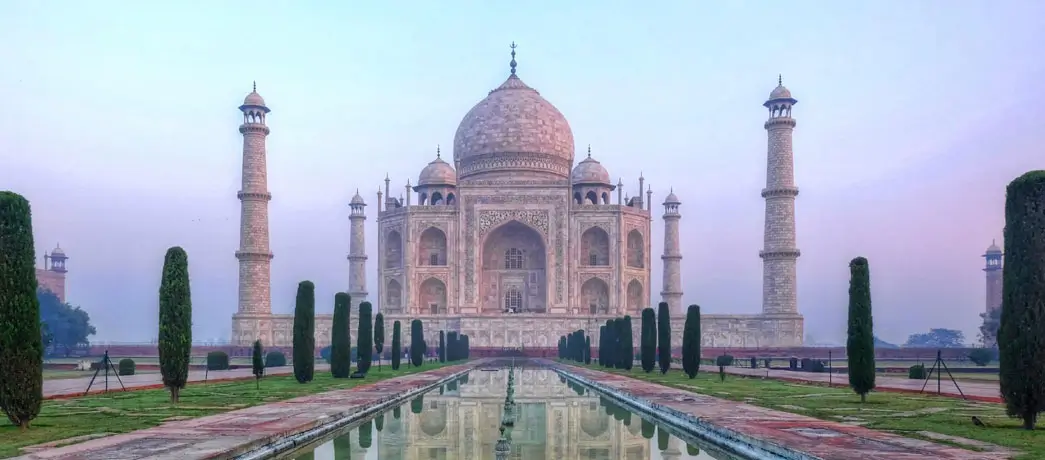
A Monument of Eternal Grace
The Taj Mahal stands as one of the greatest architectural achievements in human history. Its perfect white marble symmetry, grand Mughal design principles, delicate inlay craftsmanship, reflective water channels, and serene Yamuna river backdrop combine to create an unmatched feeling of timeless beauty.
Visitors from around the world arrive in Agra to witness the charm of this masterpiece—drawn by its historical significance, artistic richness, and emotional depth. The Taj Mahal reflects devotion, power, refinement, and precision. Every surface tells a symbolic story, every panel holds a piece of legacy, and every reflection pool frames a poetic moment.
This guide provides a premium, highly detailed overview of visiting hours, ticket prices, entry rules, timing recommendations, night-viewing policies, photography essentials, and important traveler tips, ensuring a richly informed visit.
The Taj Mahal was commissioned by Emperor Shah Jahan in the 17th century in memory of his wife, Mumtaz Mahal. The design represents the emotional union of devotion and grandeur, blending Mughal, Persian, Ottoman, and Indian elements in a perfectly harmonized structure.
White Makrana marble forms the primary material, chosen for its ability to reflect different shades throughout the day. Semi-precious stones inlaid into the marble create delicate floral motifs through a technique called pietra dura. The central dome, four minarets, symmetrical courtyards, arched gateways, marble lattice screens, and the meticulously designed gardens all work together to create an atmosphere of serenity and artistic balance.
The monument’s architectural language centers around harmony—every angle, reflection, shadow, and surface appears thoughtfully crafted. This refinement makes the Taj Mahal a masterpiece that appeals equally to historians, architects, photographers, and travelers seeking cultural depth.
The Taj Mahal follows specific operating hours to maintain crowd control, heritage protection, and visitor safety. Understanding the timings helps plan an ideal visit that includes comfortable movement, perfect lighting, and smoother entry.
General Visiting Hours
The Taj Mahal opens one hour before sunrise and closes 45 minutes before sunset.
These timings ensure that the monument remains accessible during the most visually appealing hours of the day.
The soft morning light reveals a gentle pinkish glaze on the marble, while the late afternoon creates warm golden tones. Both periods offer distinct visual moods.
Weekly Closure
The Taj Mahal remains closed every Friday for general visitors.
It opens exclusively for prayers for the local mosque community.
Travelers planning a multi-city itinerary should keep Friday closure in mind when scheduling their Agra visit.
Night Viewing Hours
The Taj Mahal offers night viewing on limited days:
Night viewing is available from 8:30 PM to 12:30 AM, in multiple batches of 30 minutes each.
Night visits are suspended on Fridays and during the month of Ramadan.
Night access gives a surreal view of the marble shimmering under moonlight. The monument appears quiet, meditative, and poetic—offering a rare perspective not otherwise possible.
The Taj Mahal has different ticket categories based on nationality and access preferences. Separate charges apply for entry into the main mausoleum chamber.
Indian Citizens / OCI Cardholders
Foreign Tourists (Non-SAARC / Non-BIMSTEC)
SAARC & BIMSTEC Nationals
Children (Below 15 Years)
Entry is free, regardless of nationality.
Night Viewing Tickets
Night-viewing tickets must be purchased in advance through designated counters. Only 50–60 persons are allowed per time slot, keeping the ambience quiet and dignified.
To preserve the monument’s structural integrity and reduce overcrowding, the Taj Mahal enforces specific rules:
Prohibited Items
Only essential belongings, small bags, mobile phones, and compact cameras are allowed.
Allowed Items
Shoe Covers
Visitors entering the main mausoleum are required to wear shoe covers. Entry staff provides disposable covers for convenience.
The Taj Mahal transforms beautifully through the day:
Early Morning
This is the most preferred slot for both photographers and travelers seeking quiet ambience.
Late Afternoon
The detailed inlay work becomes sharper under slanting sunlight.
Night Viewing
Night visits offer the most exclusive and rare perspective.
Seasonal Best Time
The best months are October to March, when Agra enjoys pleasant weather.
Summer afternoons are very warm, making mornings and evenings ideal.
Beyond the main mausoleum, the Taj Mahal has layers of architectural and symbolic elements:
Great Gate (Darwaza-i-Rauza)
The imposing sandstone gateway frames the monument like a ceremonial entrance.
The first view from the gate is one of the most iconic travel moments in the world.
Charbagh Garden Layout
Four lush quadrants divided by water channels represent celestial gardens.
The layout draws from Persian influences.
Reflecting Pool
The long water channel leading to the mausoleum creates the famous mirror reflection of the Taj Mahal.
This is one of the most photographed points in the complex
Main Mausoleum
The central dome, white marble walls, floral motifs, Quranic inscriptions, and intricately carved marble screens elevate this area to spiritual grandeur.
Riverfront Terrace
The backside of the Taj Mahal opens to a quiet view of the Yamuna River, creating a peaceful escape from the main crowd.
Professional and casual photographers both find extraordinary opportunities at the Taj Mahal.
Best Angles
Lighting Tips
Restrictions
The Taj Mahal represents deep emotional and spiritual significance.
Visitors are encouraged to:
These small gestures enhance everyone’s experience.
A complete Taj Mahal visit may take 2 to 3 hours, including:
Night viewing requires only 30 minutes per batch.
No. The mausoleum requires an additional ₹200 fee.
It remains closed for general visitors. Only Muslims may enter for prayers.
Yes, mobiles are allowed but must remain silent near sacred areas.
Only through authorized counters, usually at ASI offices in Agra.
Each batch lasts 30 minutes between 8:30 PM – 12:30 AM.
Yes, but without tripods. Additional charges may apply in restricted areas.
Yes, wheelchairs are available at the entrance on a refundable deposit.
No, food is not permitted for preservation reasons.
October to March is ideal for pleasant temperatures and clear visibility.
Yes, children below 15 years enter without tickets regardless of nationality.