

15 Oct 2025
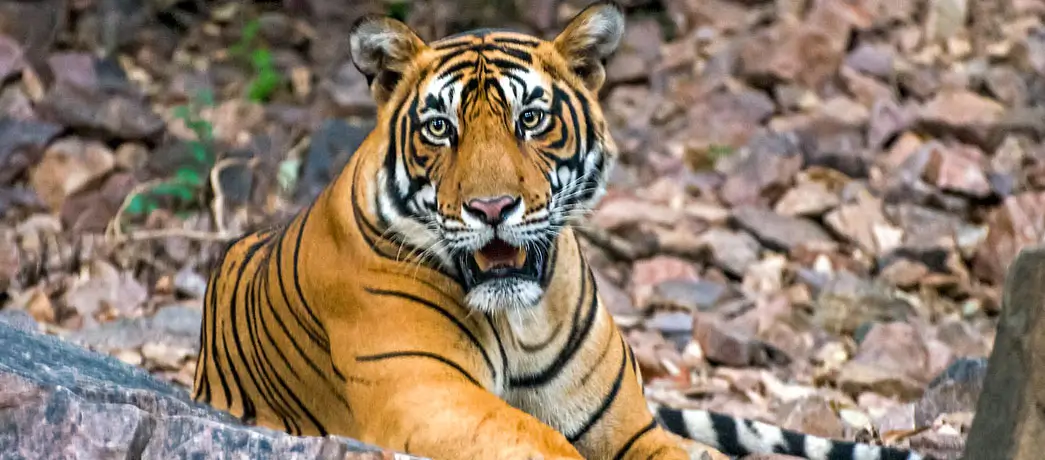
India’s forests hold a rhythm that no city can imitate — a quiet pulse that beats beneath the soil, through the leaves, and within the eyes of its wild creatures. While Ranthambore National Park has earned global fame for its tiger sightings and royal history, India’s true wildlife story lies far beyond Rajasthan’s boundaries. The country is home to more than 500 wildlife sanctuaries and 100 national parks, each offering a distinctive landscape, culture, and encounter with nature.
For travelers seeking something deeper than a checklist safari, here are the top 10 wildlife safaris beyond Ranthambore that bring you closer to India’s wilderness in its purest form.
Deep in Maharashtra’s Chandrapur district lies Tadoba Andhari Tiger Reserve, a forest where silence often breaks with the call of the sambar and the growl of a tiger. It’s one of India’s oldest and most thriving reserves, with a tiger population crossing 100.
Unlike crowded parks, Tadoba maintains its raw, unfiltered jungle essence. The dry deciduous forest with bamboo groves, dense teak, and calm lakes provides perfect tiger habitat. Along with tigers, you can sight leopards, sloth bears, wild dogs (dhole), and several species of deer.
Safaris here run twice daily in open gypsies. Photographers particularly admire Tadoba for its close-range sightings and golden lighting conditions.
Best Time to Visit: February to May
Nearest Airport: Nagpur (approx. 140 km)
On the border of Madhya Pradesh and Maharashtra lies Pench National Park, the forest that inspired Rudyard Kipling’s The Jungle Book. This park combines adventure, tranquility, and nostalgia for anyone who grew up with the story of Mowgli.
Pench is dominated by teak trees, meadows, and the Pench River that nourishes its ecosystem. You can encounter tigers, leopards, jackals, chital, gaur, and over 250 bird species. It’s one of the best maintained parks in India with eco-friendly lodges and trained naturalists.
Night safaris have been introduced in certain buffer zones, adding a new thrill to wildlife enthusiasts.
Best Time to Visit: November to April
Nearest Airport: Nagpur (90 km)
In Assam, at the foothills of the Eastern Himalayas, stretches Kaziranga National Park, a UNESCO World Heritage Site and home to two-thirds of the world’s one-horned rhinoceros. This landscape of tall elephant grass, marshlands, and riverine forests embodies raw, tropical wilderness.
Apart from rhinos, Kaziranga houses wild elephants, water buffaloes, swamp deer, and a strong population of tigers, making it one of the most biodiverse parks in Asia. Jeep and elephant safaris across the park’s four ranges offer varied perspectives — from grasslands to wetlands.
Bird watchers also find heaven here, with hundreds of migratory species visiting each winter.
Best Time to Visit: November to April
Nearest Airport: Guwahati (217 km)
In the misty hills of Thekkady lies Periyar Wildlife Sanctuary, a lush gem in South India. Unlike the dry forests of central India, Periyar offers an entirely different mood — green, serene, and drenched in the fragrance of cardamom.
What makes Periyar unique is its boat safari on Periyar Lake, where you might spot herds of Asian elephants drinking along the shore. The park also shelters gaur, sambar, macaques, and over 260 bird species. Travelers can also enjoy guided treks and bamboo rafting organized by local tribes.
It’s ideal for couples or families combining South India wildlife tours with Kerala backwaters or hill stations.
Best Time to Visit: October to March
Nearest Airport: Kochi (145 km)
Central India’s Bandhavgarh National Park in Madhya Pradesh has the highest density of Royal Bengal tigers. Spread across Sal forests, grasslands, and ancient ruins, it feels like a live museum of history and wilderness.
Bandhavgarh was once a royal hunting preserve; today, its tiger population thrives in protected harmony. The park is also home to leopards, barking deer, langurs, and several birds of prey.
A climb to Bandhavgarh Fort reveals ancient carvings and panoramic jungle views — making this park perfect for both wildlife and culture lovers.
Best Time to Visit: March to June
Nearest Airport: Jabalpur (195 km)
For those who want solitude, Satpura National Park is the definition of peace. Located in the Satpura Hills of Madhya Pradesh, it’s known for its untouched beauty and diverse terrain — ranging from sandstone peaks and deep ravines to dense forests.
Unlike many parks, Satpura allows walking safaris, canoe rides, and night drives, offering a truly intimate connection with nature. You can spot sloth bears, leopards, Indian bison, crocodiles, and countless birds.
The park’s sustainable approach and low tourist volume make it a top choice for conscious travelers.
Best Time to Visit: October to March
Nearest Airport: Bhopal (200 km)
Where land meets the sea in a maze of mangroves lies Sundarbans, India’s most mysterious and water-bound wildlife destination. Spread across West Bengal’s delta region, it’s home to the famous swimming tigers, who have adapted to saline waters.
Safaris here are conducted on motorboats that glide through narrow channels lined with mangrove roots. Apart from tigers, visitors may see saltwater crocodiles, spotted deer, fishing cats, and hundreds of bird species.
Sundarbans is not just a safari — it’s a sensory experience of life coexisting with tides, wildlife, and folklore.
Best Time to Visit: November to February
Nearest Airport: Kolkata (110 km)
Part of the Nilgiri Biosphere Reserve, Nagarhole National Park offers a rich blend of forest, rivers, and grasslands. The park supports a thriving population of tigers, elephants, leopards, wild dogs, and countless birds.
Its proximity to Coorg and Mysuru makes it an easy addition to a South India circuit with private car and driver. Jeep and boat safaris here are professionally managed, ensuring good chances of sightings.
Best Time to Visit: October to May
Nearest Airport: Mysuru (96 km)
In Gujarat’s dry deciduous forests stands Gir National Park, the only place in the world where Asiatic lions roam freely. Visiting Gir is like stepping into a different wildlife narrative — one that speaks of resilience and revival.
Apart from lions, Gir is home to leopards, hyenas, nilgai, chital, and over 300 bird species. Safari bookings are well-organized, and local communities actively support conservation.
Best Time to Visit: December to March
Nearest Airport: Rajkot (160 km)
Spread over 900 sq km in Madhya Pradesh, Kanha National Park is a masterpiece of natural balance — sal forests, grassy meadows, and clear streams that inspired Kipling’s imagination.
Kanha’s well-maintained safari system, excellent guides, and high tiger density make it a dream for wildlife photographers. You can also find barasingha (swamp deer), a rare species revived here from near extinction.
The park’s conservation efforts and eco-lodges reflect India’s commitment to sustainable tourism.
Best Time to Visit: February to June
Nearest Airport: Jabalpur (160 km)
Each of these reserves represents a different story of India’s natural wealth. From the mangroves of the east to the dry forests of the west, every park adds a chapter to the country’s biodiversity.
Travelers who plan journeys with a private car and driver can seamlessly connect multiple reserves, experiencing diverse terrains and local cultures at their own pace. These safaris also support community livelihoods and conservation — a small way every traveler contributes to protecting the wild.
Whether it’s the call of a barasingha in Kanha, the echo of elephants in Periyar, or the silent stare of a tiger in Tadoba, India’s forests remain timeless, waiting for those who wish to listen.
Bandhavgarh and Tadoba offer the highest chances of tiger sightings due to their compact core zones and healthy tiger populations.
Yes. All safaris are government-regulated, guided by trained naturalists and drivers. Vehicles follow strict safety and distance norms.
The prime season is October to June, with peak sightings during March to May when animals visit waterholes.
Absolutely. Many travelers combine safaris with Golden Triangle tours or South India circuits using a private driver.
No safari can guarantee a sighting, but parks like Bandhavgarh, Tadoba, and Kanha offer very high chances.
Bookings can be made through official forest department websites or via licensed tour operators specializing in India wildlife tours.
Wear muted earthy colors, avoid perfumes, and carry hats or scarves for sun protection.
Kaziranga, Periyar, and Satpura are paradise for bird lovers, hosting both resident and migratory species.
Yes. Every park mentioned offers eco-lodges, forest resorts, and sustainable stays supporting local conservation.
For a wholesome experience, plan at least 8–10 days, covering two major parks connected by a private car and driver.