

05 Jun 2026
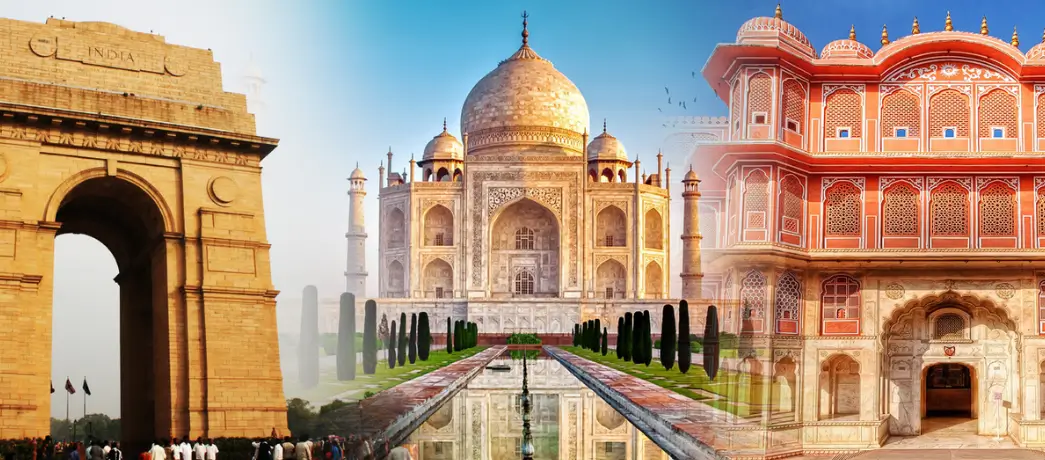
One of the most common questions international travelers ask while planning a trip to India is surprisingly simple: how many cities should be included in a two-week itinerary?
At first glance, the answer appears straightforward. Fourteen days sounds like a substantial amount of time. Many travelers assume they can comfortably visit eight, ten, or even twelve destinations within that period. After all, they may have completed multi-country European trips covering several cities in two weeks. Others may have visited multiple destinations across Southeast Asia during similar timeframes.
India, however, works differently.
The country's size, cultural diversity, transportation logistics, climate variations, and sheer volume of attractions often lead first-time visitors to create itineraries that are far more ambitious than practical. Travelers frequently spend months researching destinations and become excited about everything they discover. Rajasthan's palaces, the Taj Mahal, Varanasi's spiritual atmosphere, Kerala's backwaters, Himalayan landscapes, wildlife reserves, and vibrant cities all seem impossible to ignore.
The result is often a travel plan that attempts to include too much.
Ironically, travelers who visit fewer cities often enjoy India far more than those who constantly move from one destination to another. A carefully designed two-week India itinerary, private India tour, or 14-day India travel plan should prioritize quality experiences rather than maximizing destination count.
Understanding how travel works across India and how different types of itineraries affect comfort can help visitors design a journey that feels rewarding rather than exhausting.
Learn how to create a well-paced itinerary that lets you explore India's highlights without feeling rushed.
Why Most First-Time Visitors Try to Include Too Many Cities
Planning an India trip often begins with enthusiasm and curiosity.
Travelers start reading articles, watching videos, browsing photography galleries, and exploring travel websites. Every destination appears fascinating. Jaipur offers magnificent forts. Udaipur has lakes and palace hotels. Varanasi promises spiritual experiences. Kerala showcases tropical landscapes. Jodhpur features dramatic architecture. Mumbai presents urban energy. The Himalayas offer breathtaking scenery.
The challenge is that these destinations are not located within a small geographical area.
Many visitors underestimate the distances involved because they focus primarily on attractions rather than transportation logistics. Looking at a map, cities may appear relatively close together. In practice, moving between destinations often requires significant time.
Flights, road transfers, train journeys, hotel check-ins, airport procedures, and sightseeing schedules all consume portions of the itinerary.
A traveler who includes eight or nine destinations in fourteen days may spend a surprisingly large percentage of the trip simply moving from one place to another.
The issue is not that ambitious itineraries are impossible. They are technically achievable. The problem is that constant movement reduces the time available to actually experience each destination.
Travelers often remember relaxed evenings overlooking Lake Pichola in Udaipur or sunrise at the Taj Mahal more vividly than airport transfers and hotel check-ins.
India rewards slower travel because every city offers multiple layers of history, culture, architecture, cuisine, and daily life. Spending additional time in fewer locations generally creates richer and more memorable experiences.
One reason travelers miscalculate itineraries is that they only consider the transportation itself rather than everything surrounding it.
A domestic flight may last only ninety minutes, but the actual process involves far more time. Travelers must leave their hotel, reach the airport, complete security procedures, wait for boarding, collect baggage, arrange transfers, and check into the next hotel.
What appears to be a short flight often occupies half a day.
Road travel presents similar challenges. A journey between two cities may involve sightseeing stops, traffic conditions, rest breaks, and varying road speeds.
Even train travel, which many visitors enjoy, requires planning and scheduling considerations.
When designing a private India itinerary, experienced travel planners often view transfer days differently from sightseeing days. A transfer day is not fully available for exploration, even if the actual transportation time appears limited.
This understanding dramatically changes how itineraries are structured.
A traveler with fourteen days available does not actually have fourteen full sightseeing days. Once arrival and departure logistics are considered, the number becomes smaller.
Recognizing this reality helps create more realistic travel plans.
For most international visitors, particularly those visiting India for the first time, four to six destinations represent the ideal range for a two-week itinerary.
This balance allows travelers to experience diversity without feeling rushed.
A classic example is the Golden Triangle Tour with Rajasthan extension. An itinerary might include Delhi, Agra, Jaipur, Udaipur, and Jodhpur. Five destinations over fourteen days provide sufficient variety while maintaining a comfortable pace.
Each city contributes something different. Delhi introduces history and modern India. Agra showcases Mughal architecture. Jaipur reveals royal heritage. Udaipur offers lakes and luxury hospitality. Jodhpur adds dramatic forts and cultural depth.
Because the route is geographically logical, travel time remains manageable.
Similarly, a South India itinerary might focus on Kochi, Munnar, Thekkady, Kumarakom, and Alleppey. Again, five destinations provide excellent variety without excessive movement.
The goal is not to maximize destination count. The goal is to maximize meaningful experiences.
Travelers who focus on fewer cities often discover that they remember far more from each location.
Plan a balanced India itinerary that gives you enough time to experience each destination while enjoying a comfortable journey.
One useful principle for itinerary planning is the value of multiple nights in the same destination.
Many first-time visitors allocate only one night to several cities because they want to fit additional locations into the itinerary. This approach frequently creates fatigue and limits opportunities for genuine exploration.
Consider Udaipur as an example.
A traveler arriving in the afternoon, spending one night, and departing the next morning barely experiences the city. There is little time for lake cruises, palace visits, sunset viewpoints, cultural performances, local markets, or simply enjoying the atmosphere.
By contrast, spending two or three nights allows a far more relaxed and rewarding experience.
The same principle applies to Jaipur, Varanasi, Jodhpur, and many other destinations.
Longer stays reduce packing, transportation stress, and constant schedule management. They also create opportunities for spontaneous discoveries that often become trip highlights.
When evaluating how many cities to include, travelers should consider not only destination count but also the quality of time spent within each location.
Not all travelers should follow the same itinerary structure.
Luxury travelers often benefit from fewer destinations because they prioritize comfort, premium accommodations, and immersive experiences.
A luxury India tour may focus on four or five destinations while emphasizing heritage hotels, cultural activities, wellness experiences, and personalized sightseeing.
Photography enthusiasts frequently require additional time in each location because light conditions, local interactions, and landscape exploration cannot be rushed.
Retired travelers generally prefer slower itineraries with fewer hotel changes and more opportunities for relaxation.
Families may also benefit from reduced destination counts because logistics become more complex when traveling with children.
Adventure travelers sometimes move more quickly, but even they must consider transportation realities.
The ideal number of cities depends partly on travel style, but the principle of quality over quantity remains consistently valuable.
Some itinerary structures consistently perform well because they balance sightseeing with realistic travel logistics.
The Golden Triangle with Udaipur and Jodhpur remains one of the most successful options. It combines iconic landmarks, royal heritage, luxury accommodations, and cultural experiences within a manageable route.
Another strong option combines Delhi, Agra, Jaipur, Udaipur, and Varanasi. This itinerary adds spiritual depth to the traditional Golden Triangle framework.
Travelers interested in South India often choose Kochi, Munnar, Thekkady, Kumarakom, and Alleppey. The route emphasizes nature, culture, wellness, and relaxation.
Wildlife-focused travelers may combine Delhi, Agra, Jaipur, Ranthambore, and Udaipur. This structure incorporates tiger safaris while maintaining cultural diversity.
These itineraries work because they respect geographical realities and avoid unnecessary backtracking.
Well-designed routes often outperform more ambitious schedules containing additional destinations.
Travelers can often identify itinerary problems before departure.
If nearly every day involves packing, checking out, transferring, and checking in again, the schedule is probably too aggressive.
If there is little time for spontaneous exploration, relaxation, or flexible sightseeing, destination count may be excessive.
If transportation occupies a large portion of available time, simplification may improve the overall experience.
Many experienced travelers recommend reviewing an itinerary and asking a simple question: would I rather spend another day here or spend that day traveling somewhere else?
The answer frequently reveals whether the schedule is balanced appropriately.
Many first-time visitors behave as though they must see everything because they may never return.
Interestingly, India often creates the opposite effect.
Travelers who enjoy well-paced itineraries frequently decide to return because they realize how much remains to be explored.
Instead of attempting to cover the entire country in one visit, many experienced visitors treat India as a destination worthy of multiple journeys.
One trip might focus on Rajasthan. Another could explore Kerala. A future visit might concentrate on wildlife, spirituality, or the Himalayas.
This approach transforms India from a checklist destination into an ongoing travel experience.
The country rewards repeated exploration because each region offers unique perspectives, traditions, landscapes, and cultural experiences.
Most travelers enjoy a more comfortable experience when focusing on four to six destinations.
Yes, but the itinerary may become exhausting and leave limited time for meaningful exploration.
The Golden Triangle combined with Rajasthan destinations such as Udaipur and Jodhpur remains one of the most popular options.
Many underestimate travel times and become excited about the country's large number of attractions.
Flights help, but airport procedures and transfers still consume significant portions of the day.
Two to three nights often provide a much better experience than single-night stays.
For most travelers, yes. Additional time in fewer destinations generally creates richer experiences.
Luxury travelers often benefit from slower itineraries that emphasize comfort and immersive experiences.
Yes, but careful planning is required to maintain a comfortable pace.
Many travelers find that several focused journeys provide a more rewarding experience than trying to see everything at once.