

30 May 2026
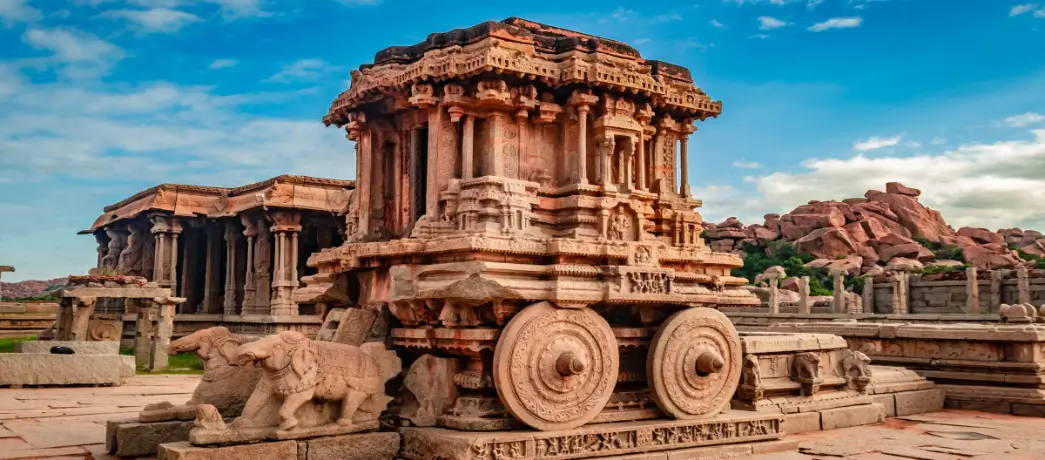
India possesses one of the richest cultural landscapes on Earth. Few countries can match its combination of ancient civilizations, royal dynasties, religious traditions, architectural achievements, artistic heritage, and historical continuity. Across the country, travelers encounter monuments, temples, forts, palaces, archaeological sites, and historic cities that collectively tell the story of thousands of years of human history.
Many travelers are familiar with the Taj Mahal, which is perhaps India's most internationally recognized UNESCO World Heritage Site. However, focusing solely on individual monuments often means missing the broader historical connections that link many of India's greatest heritage destinations together.
This is where UNESCO heritage circuits become particularly valuable.
Rather than viewing monuments as isolated attractions, heritage circuits allow travelers to experience entire cultural landscapes. A well-designed UNESCO India tour, heritage circuit India itinerary, or private cultural tour of India reveals how different dynasties, architectural styles, religions, and historical periods influenced one another across centuries.
These circuits also create more rewarding travel experiences because they combine multiple UNESCO sites within logical geographical routes. Travelers gain a deeper understanding of India's history while reducing unnecessary travel time.
From Mughal masterpieces and Rajput forts to ancient Buddhist sites and South Indian temple complexes, India offers some of the most extraordinary heritage circuits in the world. For travelers interested in culture, history, architecture, photography, and meaningful exploration, these routes provide a remarkable introduction to the country's heritage.
Experience the country's rich history and architectural wonders by visiting some of the world's most remarkable UNESCO-listed destinations.
Many first-time visitors approach India by creating a list of famous attractions they want to see. While this method works to a degree, it often results in fragmented travel experiences.
Travelers may visit the Taj Mahal one day, a palace several days later, and an ancient temple somewhere else without fully understanding how these places relate to broader historical developments.
Heritage circuits provide context.
Instead of treating monuments as isolated landmarks, they reveal connections between historical periods, political movements, religious traditions, trade routes, and artistic influences.
For example, exploring Delhi, Agra, Fatehpur Sikri, and Jaipur together creates a much richer understanding of Mughal and Rajput history than visiting any single destination independently.
Similarly, a South India heritage circuit helps travelers understand how temple architecture evolved across centuries and how different kingdoms shaped the region's cultural identity.
Another advantage is logistical efficiency. UNESCO sites located within the same region often complement one another naturally. Travel routes become more practical, reducing long transfers and allowing more time for exploration.
Heritage circuits also encourage slower travel. Rather than rushing between distant destinations, travelers spend more time engaging with a particular region and its historical narrative.
For visitors who genuinely want to understand India rather than simply photograph famous landmarks, heritage circuits provide a far more rewarding approach.
No UNESCO heritage circuit in India is more famous than the Golden Triangle.
Connecting Delhi, Agra, and Jaipur, this route introduces travelers to some of the country's most significant cultural and architectural treasures.
Delhi serves as the historical gateway. UNESCO sites such as Qutub Minar and Humayun's Tomb showcase the evolution of Indo-Islamic architecture and provide insight into the foundations of Mughal design.
Humayun's Tomb is particularly important because many architectural elements later influenced the construction of the Taj Mahal. Visitors often discover that understanding Humayun's Tomb enhances their appreciation of Agra's more famous monument.
Agra forms the heart of the circuit. The Taj Mahal remains one of the greatest architectural achievements in human history. Nearby, Agra Fort further illustrates the power and sophistication of the Mughal Empire.
A short distance away lies Fatehpur Sikri, another UNESCO World Heritage Site. Built as an imperial capital by Emperor Akbar, the city offers extraordinary insight into Mughal planning, architecture, and political ambition.
Jaipur completes the circuit through its connection to Rajput heritage. The city's historic core and nearby Amber Fort reveal a different but complementary architectural tradition.
Together, these destinations create one of the most comprehensive introductions to India's cultural history.
For first-time visitors, the Golden Triangle remains one of the finest UNESCO tours in India.
Few regions possess as many dramatic fortifications as Rajasthan.
Across the state, UNESCO-recognized hill forts demonstrate the military, political, and cultural achievements of Rajput rulers. These structures are not simply defensive installations. They functioned as cities, royal residences, administrative centers, and symbols of power.
The Hill Forts of Rajasthan UNESCO Site includes several extraordinary locations, each representing a different chapter of regional history.
Amber Fort near Jaipur combines military architecture with royal elegance. Massive gateways, intricate interiors, and panoramic views create an unforgettable visitor experience.
Chittorgarh Fort stands as one of the largest fort complexes in India. Its scale, history, and legends make it one of Rajasthan's most important heritage destinations.
Kumbhalgarh Fort possesses one of the longest defensive walls in the world and showcases the strategic sophistication of Rajput engineering.
Jaisalmer Fort differs from many historic forts because it remains a living community. Residents continue to live and work within its ancient walls, creating a unique blend of history and daily life.
Ranthambore Fort adds another dimension by combining cultural heritage with wildlife landscapes.
Traveling through Rajasthan's fort circuit allows visitors to experience architecture, history, and regional identity on a grand scale.
India is the birthplace of Buddhism, making it one of the world's most important destinations for travelers interested in spiritual and religious history.
The Buddhist Heritage Circuit India connects several sites associated with the life, teachings, and influence of Buddha.
Bodh Gaya remains the circuit's most significant destination. It was here that Buddha attained enlightenment beneath the Bodhi Tree. The Mahabodhi Temple Complex, a UNESCO World Heritage Site, attracts pilgrims and visitors from around the globe.
Sarnath near Varanasi marks the location where Buddha delivered his first sermon. The site remains one of the most important pilgrimage destinations in Buddhism.
Other destinations frequently included in the circuit provide deeper understanding of Buddhist history and its spread across Asia.
The atmosphere of these sites differs dramatically from India's royal monuments and fortifications. Visitors often encounter a sense of tranquility and reflection that complements the country's more energetic cultural destinations.
For travelers seeking spiritual insight alongside historical exploration, the Buddhist circuit offers a unique perspective on India's heritage.
Visit world-famous heritage sites, ancient temples, and architectural masterpieces that showcase India's incredible cultural legacy.
While northern India is famous for Mughal architecture and Rajasthan's forts, South India presents a completely different heritage landscape.
The region's great temple complexes rank among the most impressive religious structures ever constructed. Their scale, artistic detail, and cultural significance create an experience unlike anything found elsewhere in the country.
The Great Living Chola Temples UNESCO Site represents one of the highlights of South Indian heritage.
The Brihadeeswarar Temple in Thanjavur demonstrates the extraordinary engineering and artistic achievements of the Chola Empire. Even modern visitors are often astonished by its scale and precision.
Additional temple complexes throughout Tamil Nadu reveal the evolution of South Indian religious architecture over centuries.
Mahabalipuram's UNESCO-listed monuments add another dimension to the circuit through rock-cut temples, sculptures, and coastal heritage sites.
Travelers interested in architecture frequently consider South India's temple circuit one of the most rewarding cultural journeys available anywhere in Asia.
Many international travelers associate heritage tourism primarily with ancient monuments. Mumbai demonstrates that more recent history can be equally fascinating.
The city's Victorian Gothic and Art Deco Ensembles UNESCO Site reflects a different chapter of India's story. These buildings illustrate the interaction between colonial influences and local creativity during a period of rapid urban development.
Walking through South Mumbai reveals an architectural landscape unlike any other Indian city. Grand civic buildings, historic hotels, elegant residential structures, and public spaces create a distinctive urban environment.
The heritage circuit often includes the Gateway of India, Chhatrapati Shivaji Maharaj Terminus, heritage districts, museums, and cultural institutions.
For travelers interested in urban history, architecture, and modern cultural evolution, Mumbai provides a compelling contrast to India's ancient heritage sites.
India's cave monuments represent some of the most remarkable artistic achievements in world history.
The Ajanta Caves and Ellora Caves, both UNESCO World Heritage Sites, showcase extraordinary examples of religious art and architecture carved directly into rock.
Ajanta's Buddhist murals and sculptures provide rare insight into ancient artistic traditions.
Ellora demonstrates religious coexistence through monuments associated with Buddhism, Hinduism, and Jainism.
The scale of craftsmanship displayed within these sites continues to amaze archaeologists, historians, and travelers alike.
For visitors interested in art, religion, and ancient engineering, the cave heritage circuit offers one of India's most unforgettable cultural experiences.
One of the greatest advantages of heritage circuits is their ability to transform sightseeing into understanding.
Instead of collecting photographs from disconnected attractions, travelers begin to appreciate how India's history unfolded across centuries.
Mughal monuments gain deeper meaning when viewed alongside Rajput forts. South Indian temples reveal different cultural traditions than northern heritage sites. Buddhist destinations provide insight into spiritual movements that shaped much of Asia.
These connections enrich the travel experience and create memories that extend beyond individual landmarks.
India's UNESCO heritage circuits allow visitors to engage with the country as a living cultural landscape rather than a collection of isolated attractions.
For travelers seeking depth, context, and genuine cultural understanding, few experiences are more rewarding.
India has numerous UNESCO World Heritage Sites covering cultural, natural, and mixed categories.
The Golden Triangle route including Delhi, Agra, and Jaipur is the most famous heritage circuit.
The Taj Mahal is generally considered India's most visited UNESCO World Heritage Site.
Yes, several important Rajput forts are included within the Hill Forts of Rajasthan UNESCO designation.
It is a route connecting important Buddhist sites associated with the life and teachings of Buddha.
Yes, South India contains some of the country's most impressive temple complexes and UNESCO monuments.
Absolutely. Many luxury tours are built around UNESCO heritage destinations.
Most travelers benefit from spending at least 10 to 15 days exploring major heritage circuits.
Yes, they provide an excellent introduction to India's cultural and historical diversity.
The Golden Triangle, Rajasthan Fort Circuit, and South India Temple Circuit are particularly rewarding for architecture enthusiasts.